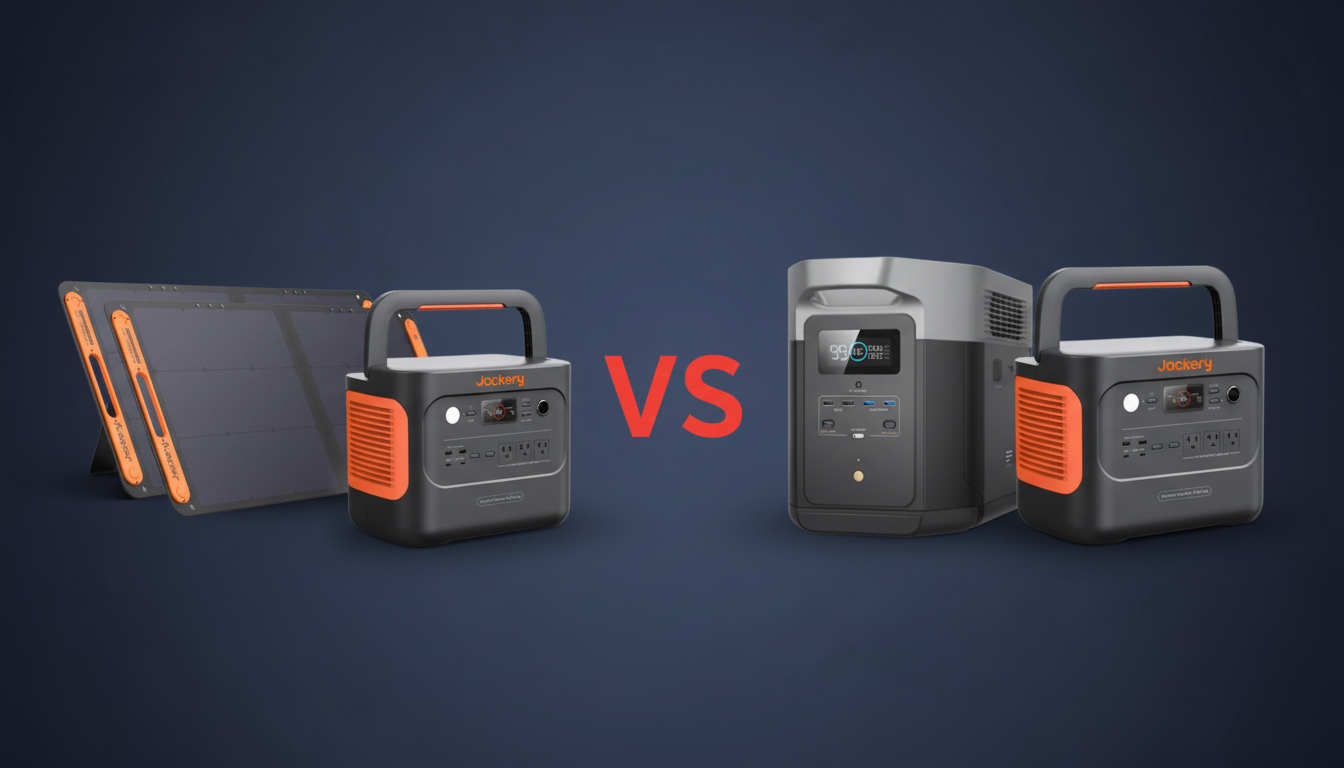
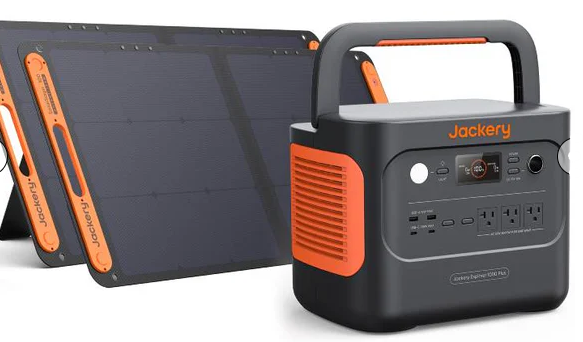
Jackery Explorer 1000 Plus
1,264 Wh · 2,000W · 14.5 kg
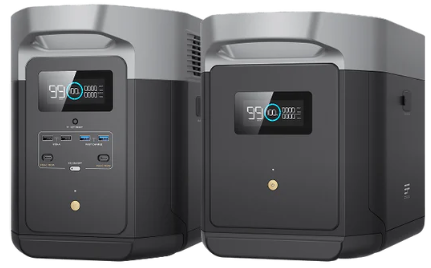
EcoFlow DELTA 2 Max
2,048 Wh · 2,400W · 23 kg
4
Jackery Wins
5
Ties
6
EcoFlow Wins
📊 Spec-by-Spec Comparison
15 categories, head-to-head. Green = winner.
| Category | Jackery 1000+ | DELTA 2 Max |
|---|---|---|
|
Battery Capacity
|
1,264 Wh | 2,048 Wh |
|
AC Output
|
2,000W (surge 4,000W) | 2,400W (surge 4,800W) |
|
Max Expansion
|
Up to 5,056 Wh (3 packs) | Up to 6,144 Wh (2 packs) |
|
Solar Input
|
800W max | 1,000W max |
|
AC Recharge Speed
|
0–100% in ~100 min | 0–80% in 43 min |
|
Battery Chemistry
|
LiFePO4 | LiFePO4 |
|
Cycle Life
|
4,000+ cycles | 3,000+ cycles |
|
Weight
|
14.5 kg (31.9 lbs) | 23 kg (50.7 lbs) |
|
AC Outlets
|
3× 120V | 6× 120V |
|
USB-C Ports
|
2× 100W PD | 2× 100W PD |
|
Noise (idle)
|
~30 dB | ~30 dB |
|
Smart App
|
Wi-Fi + Bluetooth | Wi-Fi + Bluetooth |
|
UPS Switchover
|
20ms | 30ms |
|
Portability
|
Compact, single-hand carry | Bulky, two-hand lift |
|
Warranty
|
5 years | 5 years |
Outage Runtime Calculator
Select what you'd run during an outage — see how long each lasts
Select Appliances
Total Load
235W
Jackery 1000+
4.8 hrs
1,264 Wh
DELTA 2 Max
7.8 hrs
2,048 Wh
🎯 Which Wins in Your Situation?
Tap a scenario to see which power station fits best.
Short Outage (4–8 hrs)
🏆 EcoFlowThe DELTA 2 Max's 62% more capacity (2,048 vs 1,264 Wh) gives a comfortable margin for essentials. The Jackery works but cuts it closer on a full fridge + lights + Wi-Fi load.
🔑 7 Key Differences That Matter for Outages
62% More Base Capacity (EcoFlow)
EcoFlow2,048 Wh vs 1,264 Wh out of the box. That's the difference between running your fridge for 12 hours vs 7.5 hours - often enough to make or break an overnight outage.
37% Lighter (Jackery)
Jackery14.5 kg vs 23 kg. The Jackery Explorer 1000 Plus is genuinely portable - one hand carry, fits in a car trunk, easy for stairs. The DELTA 2 Max is a two-hand lift.
2× Faster AC Recharge (EcoFlow)
EcoFlow43 minutes to 80% vs ~100 minutes to full. In a rolling outage where power comes back for 30 minutes, the EcoFlow recovers significantly more energy per cycle.
33% More Cycle Life (Jackery)
Jackery4,000+ cycles vs 3,000+ cycles to 80% capacity. Over 10 years of daily use, the Jackery retains more capacity. That's an extra 2-3 years of full performance.
Double the AC Outlets (EcoFlow)
EcoFlow6 outlets vs 3. During an outage, you're powering fridge, router, lights, TV, phone charger, and laptop - the DELTA 2 Max handles all six without a power strip.
Superior Portability Ecosystem (Jackery)
JackeryJackery's solar panels fold flat, the unit has a single integrated handle, and the expansion packs are compact. The whole system is designed to move - EcoFlow's is designed to sit.
X-Boost Technology (EcoFlow)
EcoFlowX-Boost lets the DELTA 2 Max run appliances up to 3,400W despite its 2,400W rating. Hair dryers, space heaters, and microwaves that would trip the Jackery at 2,000W work on the EcoFlow.
📈 Expansion Potential
How far can each ecosystem scale for longer outages?
✅ Outage Readiness Checklist
Applies to both stations — do these before storm season.
Fully charge your power station before storm season
Test with your actual fridge to measure real draw
Keep extension cords accessible (rated for your load)
Install solar panels for extended runtime
Run heavy appliances one at a time to stay under output limit
Enable UPS mode for medical devices & networking gear
Download the companion app for remote monitoring
Store at 60–80% charge if not used for extended periods
🎯 Who Should Buy Which?
Choose Jackery if…
Portability & simplicity first
- Portability matters - apartment, stairs, camping
- You need a grab-and-go outage kit
- Budget is a priority — save hundreds upfront
- 1,264 Wh covers your essential needs
- You value longevity — 4,000+ cycle battery
Choose EcoFlow if…
Maximum outage coverage
- You want maximum runtime (62% more capacity)
- Fast recharge matters (43 min to 80%)
- You need 6 AC outlets without a power strip
- Heavy appliances via X-Boost (up to 3,400W)
- Smart home integration (Alexa, Google, IFTTT)
❓ Frequently Asked Questions
Which is better for a power outage — Jackery or EcoFlow?
For most outages, the EcoFlow DELTA 2 Max is better due to 62% more capacity, faster charging, and more outlets. But if portability matters (apartment, camping, or moving between rooms), the lighter Jackery Explorer 1000 Plus is easier to live with.
Can the Jackery Explorer 1000 Plus run a full-size fridge?
Yes, but not as long. At 150W average draw, the Jackery runs a fridge for ~7.5 hours. The EcoFlow DELTA 2 Max lasts ~12 hours. With expansion batteries, both can extend to multi-day coverage.
Which charges faster from solar panels?
The EcoFlow accepts 1,000W solar vs 800W for the Jackery. With equivalent panels, the EcoFlow recharges about 25% faster. However, Jackery's solar panels are lighter and fold more compactly for travel.
Can either power station run an air conditioner?
The EcoFlow DELTA 2 Max can run most window ACs (500–1,200W) with X-Boost. The Jackery handles smaller window units under 2,000W but struggles with startup surges on larger models.
Which has better long-term battery health?
The Jackery's 4,000+ cycle rating vs EcoFlow's 3,000+ gives it a theoretical 33% longer lifespan. Both use LiFePO4 chemistry, so both will last 10+ years with normal use.
Are the expansion batteries cross-compatible?
No. Jackery uses proprietary Battery Pack 1000 Plus modules. EcoFlow uses DELTA 2 Max Extra Battery modules. They cannot be mixed between brands.
📋 Our Verdict
Jackery — Best for Portability
If you need a power station you can actually carry — for camping, apartments with stairs, or tossing in the car before a storm — the Jackery Explorer 1000 Plus wins. It's lighter, cheaper, lasts longer per cycle, and handles essentials perfectly.
EcoFlow — Best for Outage Coverage
For serious home backup during outages, the DELTA 2 Max is the better tool. 62% more capacity, faster charging for rolling outages, X-Boost for heavy appliances, and 6 outlets mean you can power your whole essential setup from one unit.
Bottom line: Buy the Jackery if you'll move it often. Buy the EcoFlow if it stays in one spot and needs to power as much as possible for as long as possible.
Still Deciding? Compare All Our Top Picks
Jackery and EcoFlow are just two of the brands we've reviewed. See how they stack up against BLUETTI, Anker, and Goal Zero.