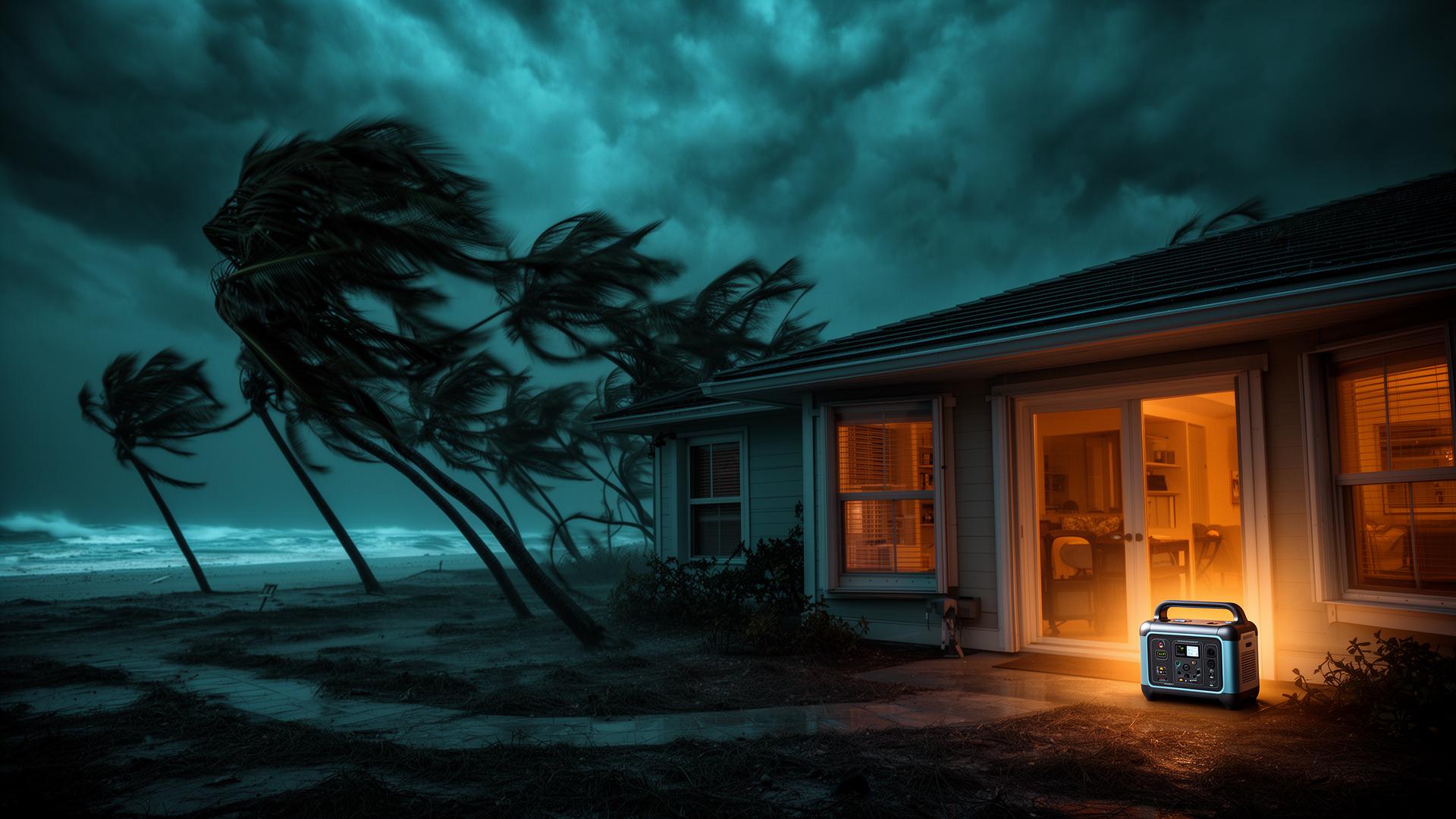
Florida's Hurricane Reality
37
direct landfalls
Hurricanes hitting FL (2000–2024)
6–14
days without power
Average outage duration (Cat 3+)
6.7M
lost power statewide
Homes affected (Irma, 2017)
5.2
hrs/day
Peak sun hours (FL avg)
🌀 Hurricane Category Impact Chart
What each category means for your power — and how long you'll be without it.
74–95 mph
1–3 days
Minor — tree branches, some power lines
96–110 mph
3–7 days
Moderate — roof damage, widespread outages
111–129 mph
7–14 days
Devastating — structural damage, weeks without power
130–156 mph
14–30 days
Catastrophic — total infrastructure destruction in hit areas
157+ mph
30+ days
Unsurvivable damage — complete rebuilding required (Andrew 1992)
⚡ What Causes Florida Power Outages?
The top 5 threats to your power — and when they strike.
Hurricanes & Tropical Storms
Jun–NovCategory 3+ storms down transmission lines, flood substations, and leave millions without power for days or weeks
Tropical Flooding & Storm Surge
Jun–NovCoastal and inland flooding destroys ground-level equipment and delays restoration crews
Summer Thunderstorms
Jun–SepDaily lightning storms — Florida is the lightning capital of the US with 1.4M strikes/year
Extreme Heat Demand
Jun–SepA/C demand peaks above 95°F, straining the grid — rolling outages possible during heat domes
Equipment & Tree Failures
Year-roundAging infrastructure, falling trees, and salt corrosion on coastal equipment
🌀 Hurricane Power Action Plan
From watch to recovery — what to do at every stage.
Watch Issued: Prepare
Charge all batteries to 100%. Buy ice. Fill bathtubs. Fuel car. Download offline maps. Test solar panels.
Warning Issued: Final Prep
Move battery station to interior room. Secure solar panels. Fill coolers with ice. Charge all devices. Take photos of property for insurance.
Storm Impact: Shelter
Stay in safe room. Run battery for lights, phones, medical devices only. Keep fridge CLOSED. Do not attempt to use solar panels.
Storm Passes: Assess
Check for structural damage. Connect fridge to battery. Deploy solar panels if skies are clearing. Conserve water. Check on neighbors.
Recovery Phase
Solar + battery cycle established. Run fridge during day, essentials at night. Dehumidifier to prevent mould. File insurance claims.
Extended Outage
Solar provides indefinite essential power. Manage fuel for vehicles. Connect with community. Many Cat 3+ outages last 2+ weeks in FL.
🏠 Shelter in Place vs. Evacuate
Your battery strategy depends on whether you're staying or going.
Shelter in Place
Best For
Cat 1–2 inland, well-built home
Battery
2,000–3,600+ Wh
Solar
400W+ panels
Priorities
- Maximum capacity for multi-day runtime
- Solar panels for indefinite power
- Dehumidifier to prevent mould
- Sump pump if flood-prone
Evacuate Inland
Best For
Cat 3+ coastal, flood zone, mobile home
Battery
1,000–2,000 Wh
Solar
200W portable panel
Priorities
- Portability — must fit in car
- Enough for hotel/shelter basics
- Phone charging for 3+ days
- Lightweight — one person can carry
💰 The Real Cost of Being Unprepared
A battery station is the cheapest insurance you can buy.
1 inch of flood water in home
Full fridge/freezer of spoiled food
Mould remediation (1 room)
Portable power station
Annual flood insurance premium (FL)
🔋 Florida Hurricane Runtime Calculator
Select your appliances and battery to see how long you'll last — with Florida solar potential.
Select Your Appliances
Total load: 495W
Battery Capacity
2,048 WhSolar Panel Watts
Peak Sun Hours (FL avg: 5.2)
5.2hBattery Only
3.5h
Battery + Solar
4.9h
Solar generates ~1,768 Wh/day
🌴 7 Reasons Every Florida Home Needs a Battery Backup
Hurricane season is 6 months of risk - every year
June through November, you're in the crosshairs. Cat 3+ storms hit Florida more than any other state.
Outages last days to weeks, not hours
After Hurricane Ian (2022), some areas waited 14+ days for power restoration. A battery + solar gives you independence.
Florida heat + no A/C is dangerous
Post-hurricane heat kills more people than the storm itself. Even running fans on battery can prevent heat stroke.
Mould starts in 24–48 hours without power
Florida's humidity means mould grows fast. A dehumidifier on battery power can save $5,000+ in remediation.
Florida has incredible solar potential
The Sunshine State averages 5.2 peak sun hours/day — enough to run essentials indefinitely with solar + battery.
Evacuation requires portable power
When you evacuate, you need power for phones, medical devices, and comfort. A portable station goes with you.
It's cheaper than one insurance deductible
A $1,500–$3,500 battery station costs less than most hurricane deductibles — and it actively prevents damage.
🏆 Top 5 Battery Stations for Florida Hurricanes
Tested against Florida-specific scenarios — hurricanes, heat, humidity, and multi-week outages.
EcoFlow DELTA Pro
Expandable to 7.2 kWh — critical for Florida's 7–14 day hurricane outages. Smart home panel for automatic switchover. Runs A/C + fridge + essentials.
Read Full ReviewBLUETTI AC200L
1,200W solar input charges in under 2 hours in Florida sunshine. LiFePO4 handles extreme heat and humidity. Power Lifting to 3,600W.
Read Full ReviewEcoFlow DELTA 2 Max
Fast 1-hour wall charge before the storm hits. Expandable to 6 kWh. X-Boost handles up to 3,100W for dehumidifiers and pumps.
Read Full ReviewAnker SOLIX F2000
HyperFlash charges 0–80% in 43 minutes — perfect when hurricane warnings give short notice. Handles Florida heat well.
Read Full ReviewJackery Explorer 1000 Plus
Light enough for one person to grab and go. Perfect for evacuation scenarios. Expandable with extra batteries if sheltering in place.
Read Full Review📊 Capacity at a Glance
✅ Florida Hurricane Readiness Checklist
Tap each item as you complete it. Get to 100% before the storm arrives.
❓ Florida Hurricane Battery FAQ
How long do Florida hurricane power outages last?
Can I run my A/C on a portable power station during a hurricane?
Should I evacuate or shelter in place with my battery?
Will solar panels work during a hurricane?
What about humidity and battery damage?
How do I prevent mould after a hurricane?
Don't Wait for the Next Hurricane
Florida averages 37 hurricanes per generation. The next one could leave you without power for weeks. Get prepared now — while the shelves are still stocked.