← Back to Guides

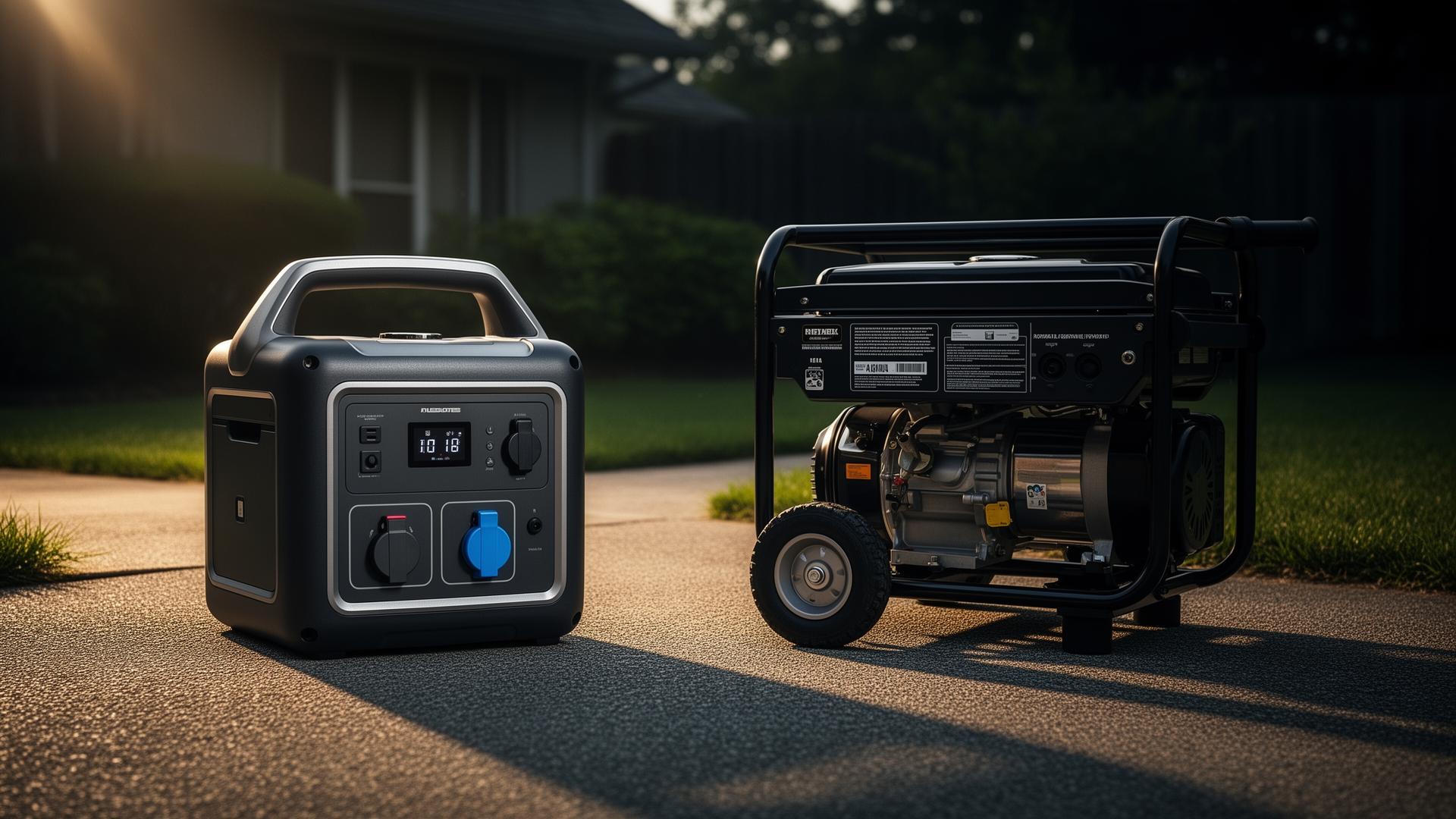
    Portable Power Station vs Gas Generator

    The honest, head-to-head comparison — with interactive tools, cost calculators, and a scenario picker to find your best option.

    Choosing between a portable power station and a gas generator? They solve the same problem — keeping things running when the grid goes down — but they do it in completely different ways.

    This guide cuts through the marketing. We compare them across 12 real-world categories, show you which wins for your specific scenario, and calculate the true cost over 5 years.

    Overall Scorecard

    Across 12 real-world categories

    8
    Power Station Wins
    vs
    1 tie
    3
    Generator Wins

    Head-to-Head Comparison

    Every category that matters, side by side.

    Noise Level

    ⚡ Station
    ⚡ Power Station
    0–50 dB (whisper quiet)
    ⛽ Generator
    65–85 dB (lawn mower loud)

    Indoor Use

    ⚡ Station
    ⚡ Power Station
    ✓ Safe indoors — zero emissions
    ⛽ Generator
    ✗ Never — deadly CO risk

    Fuel

    ⚡ Station
    ⚡ Power Station
    Electricity / solar
    ⛽ Generator
    Gasoline / propane

    Maintenance

    ⚡ Station
    ⚡ Power Station
    None — no moving parts
    ⛽ Generator
    Oil changes, spark plugs, filters

    Runtime (1,000W load)

    ⛽ Generator
    ⚡ Power Station
    2–5 hrs (battery dependent)
    ⛽ Generator
    8–12 hrs (tank dependent)

    Max Output

    ⛽ Generator
    ⚡ Power Station
    1,800–7,200W typical
    ⛽ Generator
    3,000–12,000W+ typical

    Upfront Cost

    ⛽ Generator
    ⚡ Power Station
    $800–$3,500 (1–3 kWh)
    ⛽ Generator
    $300–$1,500 (3–8 kW)

    Running Cost

    ⚡ Station
    ⚡ Power Station
    $0 with solar, pennies from grid
    ⛽ Generator
    $5–$30/day in fuel

    Portability

    ⚡ Station
    ⚡ Power Station
    20–60 lbs, carry indoors
    ⛽ Generator
    50–200+ lbs, stays outside

    Environmental

    ⚡ Station
    ⚡ Power Station
    Zero emissions, recyclable battery
    ⛽ Generator
    CO₂, CO, noise pollution

    Startup Time

    ⚡ Station
    ⚡ Power Station
    Instant — press a button
    ⛽ Generator
    Pull-start, warm up

    Lifespan

    Draw
    ⚡ Power Station
    2,500–3,500 charge cycles (10+ yrs)
    ⛽ Generator
    2,000–3,000 hrs (varies)

    Noise Comparison: How Loud Is a Generator?

    This is the #1 reason people switch to power stations. Here's the difference visualized.

    Whisper20 dB
    Library40 dB
    ⚡ Power Station45 dB
    Normal conversation60 dB
    ⛽ Quiet generator (inverter)58 dB
    Vacuum cleaner70 dB
    ⛽ Typical generator75 dB
    Lawn mower85 dB
    ⛽ Loud generator90 dB

    Every 10 dB increase sounds roughly twice as loud to the human ear

    Which Is Best For You?

    Pick your scenario to see our recommendation

    Short Power Outage (4–12 hrs)

    ⚡ Power Station95/100
    ⛽ Gas Generator60/100

    ⚡ Winner: Power Station

    A 2,000Wh station handles fridge, lights, phones, and WiFi for 8–12 hours — silently and indoors. No fuel, no fumes, no fuss.

    True Cost Calculator

    Compare total ownership costs over time

    $500$4,000
    $200$2,000
    $3/day$30/day
    1/yr20/yr
    1 yr10 yrs
    ⚡ Power Station$2,000
    $2,000 + $0 fuel
    ⛽ Gas Generator$1,295
    $800 + fuel + maintenance
    Year⚡ Station⛽ Generator
    Purchase$2,000$800
    Year 1$2,000$899
    Year 2$2,000$998
    Year 3$2,000$1,097
    Year 4$2,000$1,196
    Year 5$2,000$1,295

    ⛽ Generator is $705 cheaper over 5 years

    Quick Pros & Cons

    Power Station

    Silent operation
    Safe indoors — zero emissions
    Zero maintenance
    Solar rechargeable
    Instant start, no warm-up
    Lightweight and portable
    Limited capacity (battery)
    Higher upfront cost
    Can't run very heavy loads long-term

    Gas Generator

    High power output (3,000–12,000W+)
    Unlimited runtime with fuel
    Lower upfront cost
    Can power entire homes
    Loud (65–90 dB)
    Deadly CO — outdoor only
    Ongoing fuel & maintenance costs
    Heavy and not truly portable
    Pull-start can be unreliable

    Our Verdict

    For most people, a portable power station is the better choice. It covers 80% of outage scenarios silently, safely, and maintenance-free. With solar panels, it can keep your essentials running indefinitely.

    Get a generator if you need to run central AC, a large well pump (1 HP+), or power your entire house simultaneously. For these heavy-duty needs, generators still have no practical battery-powered alternative.

    The smartest play? Many households use both: a power station for everyday outages and quiet backup, plus a small generator reserved for extended multi-day emergencies.

    Found this useful?Share it or save for later

    Frequently Asked Questions

    Is a portable power station better than a generator?
    For most home backup scenarios (short outages, fridge, lights, devices), yes. Power stations are silent, safe indoors, zero maintenance, and can recharge from solar. Generators win on raw power output and extended runtime for heavy loads.
    Can a power station replace a generator?
    For 80% of typical household outage needs, yes. A 2,000Wh station can run a fridge, lights, phones, and WiFi for 8–12+ hours. For heavy loads like central AC, well pumps over 1 HP, or whole-home backup, you'll still need a generator.
    How long does a power station last vs a generator?
    Power stations last 2,500–3,500 charge cycles (10–15 years). Generators last 2,000–3,000 running hours but need regular maintenance. Over 10 years, a power station typically costs less in total.
    Are portable power stations worth the money?
    Yes, especially if you value silence, portability, indoor safety, and low maintenance. The upfront cost is higher, but zero fuel costs and zero maintenance make them cheaper over 3–5 years for typical use.
    Can I use a power station and generator together?
    Yes! Many people use a power station for everyday backup (fridge, devices, lights) and keep a generator for extreme scenarios. You can even charge a power station from a generator.
    What size power station replaces a generator?
    A 2,000–3,000Wh power station with 2,400W+ output replaces a small (2,000W) generator for most uses. For heavy loads, you'd need a 5,000Wh+ station like the EcoFlow DELTA Pro or a dual-battery setup.

    Ready to Choose?

    See our top-rated portable power stations for home backup.